Vineyard Systems
Enhancing system resilience and natural pest regulation in vineyard systems through native plant design.
Viticulture is unique. Not only is it a crop where long-term growing conditions directly shape quality, but its cultivars are highly specialized, and even subtle changes in environmental factors can influence vine performance and ultimately affect the quality of the wine.
While grapevines themselves are primarily self- and wind-pollinated and do not depend directly on insect pollination, vineyard systems as a whole do.
We focus on designing vineyard plant communities that support beneficial insect populations and strengthen long-term ecological stability. These systems are built to suite vineyards in each AVA to best withstand unique environmental pressures, including pest and disease outbreaks and increasing climate variability.
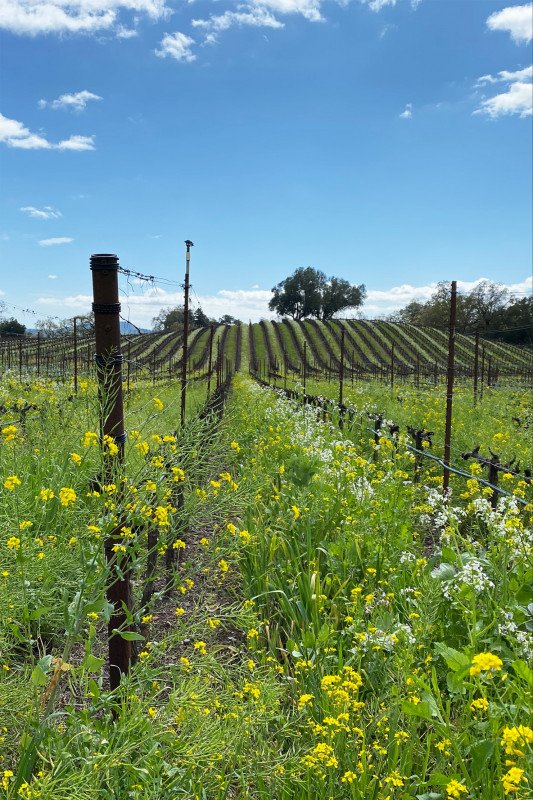
Diverse plant community supports full season insect activity at a vineyard in Geyserville, CA.
Our native plant designs support beneficial insects—including lady beetles, lacewings, hoverflies, and parasitic wasps—that contribute to the natural regulation of vineyard pests such as leafhoppers, aphids, mealybugs, and mites. By integrating native flowering plants, we provide the habitat and floral resources these insects rely on across the growing season, strengthening biological control and reducing reliance on external inputs.
Native plant communities also contribute to soil health by supporting beneficial microbial activity that promotes soil nutrient cycling and water retention, while the roots themselves reduce erosion from high wind or floods.
Timing is a critical component of these systems. Different grape cultivars progress through the season at different rates, influencing when ecological support is most needed. At the same time, the availability of floral resources directly affects the presence and persistence of beneficial insect populations.
We design systems that align these dynamics—ensuring that flowering resources are available when insect activity is most critical. The result is a more balanced, biologically supported vineyard system that improves stability, supports vine health, and contributes to consistent, high-quality production over time.
We offer systems tailored by region.
Yakima, Walla Walla, Red Mountain, Horse Heaven Hills, Lake Chelan, Wahluke Slope, Ancient Lakes
A vast inland region east of the Cascade Mountains defined by a warm, dry climate, significant temperature swings, and soils shaped by ancient Ice Age floods.
Columbia Valley
A cool, maritime region west of the Cascades where proximity to the Pacific brings mild temperatures, frequent cloud cover, and higher rainfall.
Puget Sound
A broad valley bordered by mountain ranges, featuring a cool climate, volcanic and marine soils, and a long, moderate growing season with steady precipitation.
Willamette Valley
Southern Oregon
A geologically and climatically diverse region with a patchwork of valleys, ranging from cooler coastal influences to warmer, drier inland conditions.
Rogue Umpqua Valley, Applegate Valley
We further optimize systems by cultivar phenology.
Customized Cultivar Systems
Pinot Noir/Gamay/Müller-Thurgau/Madeleine Angevine/Pinot Gris
Early Season
Designed for early-season vineyard phenology with early growth and fruit set. Focuses on early-bloom floral resources to establish beneficial insects before pest pressure begins and support the vineyard ecosystem by stabilizing dynamics before canopy closure.
Chardonnay/Sauvignon Blanc/Merlot/Cabernet Franc
Early–Mid Season
Aligned with mid-spring to early-summer growth. Emphasizes continuous floral resources to maintain stable beneficial insect populations - including parasitic wasps and hoverflies - through bloom, fruit set, and early canopy development as pest pressure starts to increase.
Syrah/Tempranillo/Sangiovese/Viognier/Chenin Blanc
Mid-Late Season
Suited to extended growing seasons. Requires mid- to late-season floral resources to maintain insect populations during peak canopy density and fruit development, when pest pressure typically increases. This is a peak pest pressure window.
Cabernet Sauvignon/Mourvèdre/Grenache/Zinfandel/Marsanne/Roussanne
Late Season
Designed for long-season vineyard phenology extending into harvest. Focuses on late-season, long-lasting floral resources to sustain beneficial insects through ripening, helping maintain pest control and ecosystem balance late in the season.
If you have a varietal that falls outside these phenologies, we would love to discuss!
Lastly, we incorporate your property’s unique layout and needs -
To deliver a detailed planting plan that ensures the right plants and insects are present at the right time.
-
Entry level system customized by region.
Aerial Site Assessment
Regional Seed Mix
Basic Planting Plan + Outline of planting zones
Implementation Guide
Establishes foundational plant systems and introduces beneficial insect support.
$2,000 – $3,500
-
Phenology-optimized system tailored to your crop.
Detailed Site Assessment
Custom Seed Mix + Phenology Alignment
Detailed Planting Plan + GIS-informed placement
Ecological Strategy + Seasonal Calendar
Implementation Plan and Guide
Spring Review
Creates a fully functional system aligned with your crop timing and supports long-term ecological performance. Also supports sustainability and marketing goals.
$4,000 – $6,500
-
Comprehensive system for full-property integration.
Everything in Standard, plus:
On Site Visit
Full Property Design
Biodiversity Baseline + Monitoring, early & mid-season metrics collection
Annual Follow-up + Recommendations
Customized Implementation Guide
Enrollment in Bee to Barrel Initiative
Maximizes ecological performance across your property with measurable outcomes and long-term system refinement.
$7,000 – $10,000+
*Pricing shown for mid-size vineyard (approx. 50 acres). Final scope is adjusted based on site size, system complexity, and level of design detail.
For more details on each package, please:
Service Packages
We offer three levels of system design.