Services
We design science-based native plant systems for vineyards, orchards, hopyards and other farms that support beneficial insects, enhance pollination services, and provide long-term crop resilience and ecological stability—improving quality, productivity, and yield.
Our services are based on science and firsthand experience.
Phenology-Optimized Systems
Not all plants produce at the same time. In fact, they have evolved to stagger their productivity to reduce competition for resources—such as pollination, soil nutrients and water. They do this by responding differently to environmental cues (e.g. first freeze or daylight hours) that tell them when to germinate, bloom and release seeds. A plant’s unique growth pattern is referred to as its phenology.
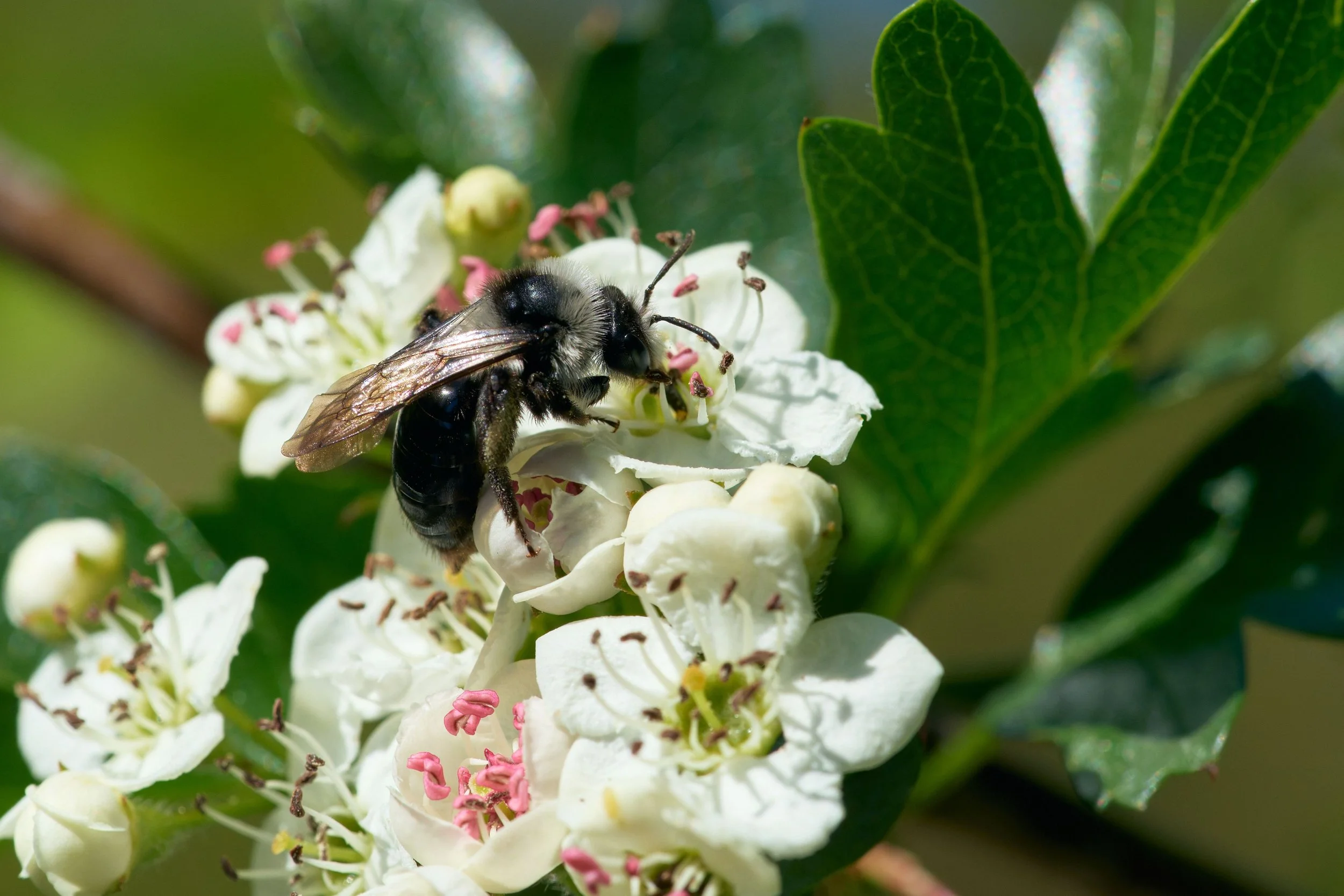
Insects have evolved to match these plant phenology patterns, creating mutually beneficial relationships that support both plant reproduction and insect survival. Therein, what plants are present will directly affect which insects are present. Most regional planting approaches overlook this nuance, instead focusing on the “bulk” of the growing season. This can unintentionally increase competition among plants and pollinators, ultimately reducing efficiency, total crop output and quality, and shorten your growing window.
By taking the time to understand your crop phenology, we design native plant communities that support the right insect populations at the right time. This approach maximizes your farm’s potential across the entire growing season—extending production windows, improving pollination, strengthening pest regulation, and maximizing overall system performance.
Native bee pollinating an apple blossom.
Enhanced Biodiversity & Resiliency
Biodiversity is a key driver of how agricultural systems function.
In agricultural landscapes, limited plant diversity often leads to gaps in nectar and pollen resources, reducing the stability of pollinators and other beneficial insect populations over time. This increases vulnerability to pest outbreaks and contributes to inconsistent crop performance.
We design native plant systems that are functionally diverse and seasonally structured, incorporating species with staggered bloom times to support multiple insect groups—including pollinators, and beneficial predators and parasitoids. Because these systems are tailored through site-specific assessment and plant selection, they provide continuous resources when and where they are most needed —strengthening the overall resiliency and performance of the agricultural system.
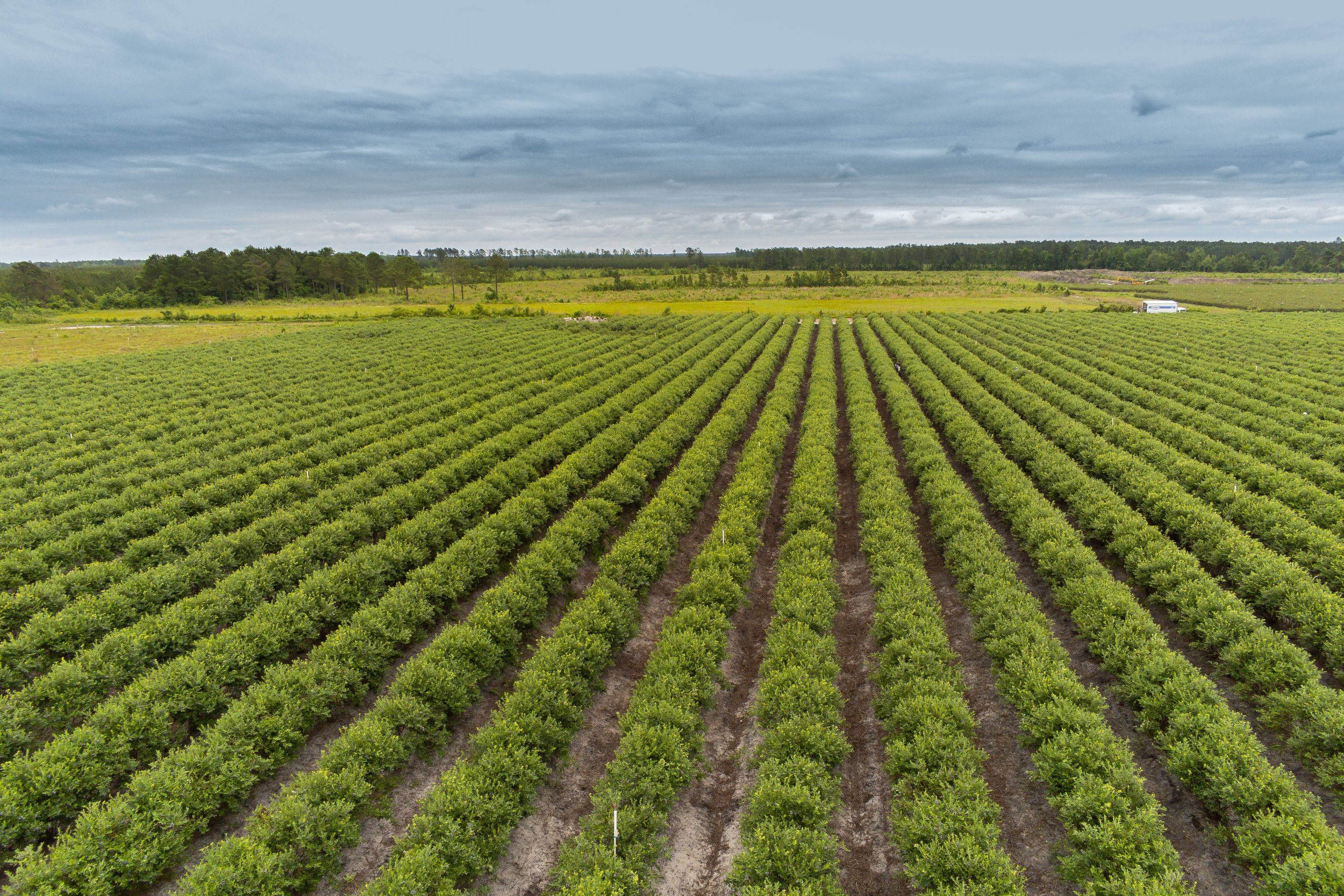
Rows of blueberry bushes.
As a result, these systems support stronger, more stable insect communities that can respond dynamically to changing conditions. Over time, this leads to improved pollination, more consistent pest control, and greater reliability in crop production.
Ecological Stability
Ecological stability describes how reliably a system continues to function under changing conditions.
Agricultural systems are constantly influenced by unexpected shifts in weather, seasonal variation, fluctuations in pest pressure, and other disturbances. Without a stable ecological foundation, these changes can lead to inconsistent crop performance and increased reliance on reactive management techniques (like importing honeybees or increased pesticide use).
Our science-driven plant designs impart stability to your system by maintaining high diversity and continuous biological activity within key insect groups throughout the season. This prevents sharp declines in insect populations when one or more species are heavily impacted by a particular disturbance or event (e.g. a heat wave or mite infestation), providing layers of protection and helping to maintain balance.
This type of stability is achieved over time. As plant communities establish, the system becomes increasingly self-regulating. Each season builds on the last— roots lock into the soil and insect populations grow — improving responsiveness to environmental variability and reducing the likelihood of disruption in productivity due to unexpected environmental changes.
Native Plant Communities & Seed Mixes
Why chose native plants? Native plants are adapted to local environmental conditions and have evolved alongside native insect communities. This makes them uniquely and ideally suited to maintain stronger, stable insect populations within regionally local vineyards, orchards and farms. Because native plants are adapted to the region, they establish reliably and take minimal effort to plant and maintain. Most are perennial, which means they persist year after year and continue performing with minimal intervention.
The result is a system that becomes more stable and predictable over time—less prone to disruption, less dependent on external inputs, and slowly optimized to support consistent crop performance year after year.
Subtle, often overlooked features—such as slope, aspect, and wind exposure—can significantly influence the distribution of water, sunlight, and floral resources. These dynamics affect not only where plants are able to thrive, but also how effectively they support insect populations and which species are present.
Our approach considers these interconnected factors to design systems that enhance ecological performance. We incorporate pollinator movement pathways, or corridors, to improve connectivity across the landscape, and identify opportunities to establish or enhance nesting habitat. These features help encourage pollinators to remain and return year after year, reducing the need for ongoing inputs.
Our seed mixes are designed combining knowledge of native plant communities and your site-specific layout and conditions (including surrounding landscape, pre-existing landcover and other environmental factors) to curate mixes that will enhance your farms immediate productivity and long-term biodiversity and stability.
We include over a dozen species per region (Puget Sound, Yakima, Willamette Valley, etc.). Within each region, we curate mixes to meet varying environmental conditions. For example - In dry years, seed mixes will contain higher concentrations of drought resistant species as well as species with more foliage to help shade soil and protect moisture. Our site-specific planting plans include varying compositions of seed mixes to support different areas of the property in achieving more stable pollinator and other beneficial insect populations, increasing connectivity, groundcover and overall crop resiliency.
All species used in our seed mixes are native with proven ability to support local pollinators and other beneficial insects.
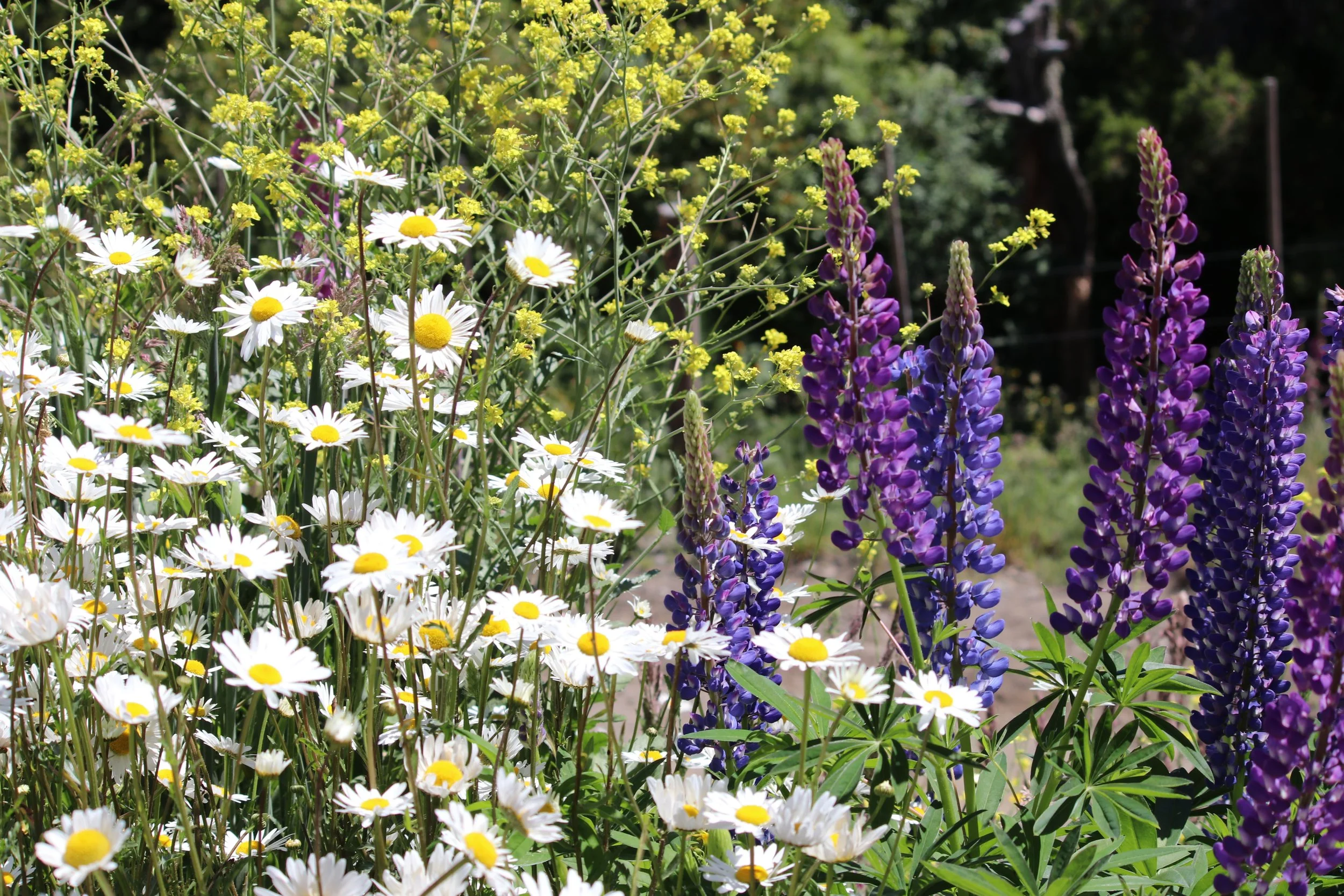
Mix of native plants on edge of vineyard in Western WA.
Customized Designs
No two vineyards, hopyards, orchards, or farms are exactly alike. Soil conditions, microclimate, field layout, and the surrounding landscape all shape how a property functions—determining how plants establish and how pollinators and other insects move through and interact with the system.
To support this process, we use spatial analytical tools to model environmental conditions and better understand property-specific dynamics. By combining on-site characteristics with the broader landscape context—and considering the unique needs of your crop—we develop tailored planting strategies that optimize the placement and composition of plant communities to maximize ecological function and long-term benefits.
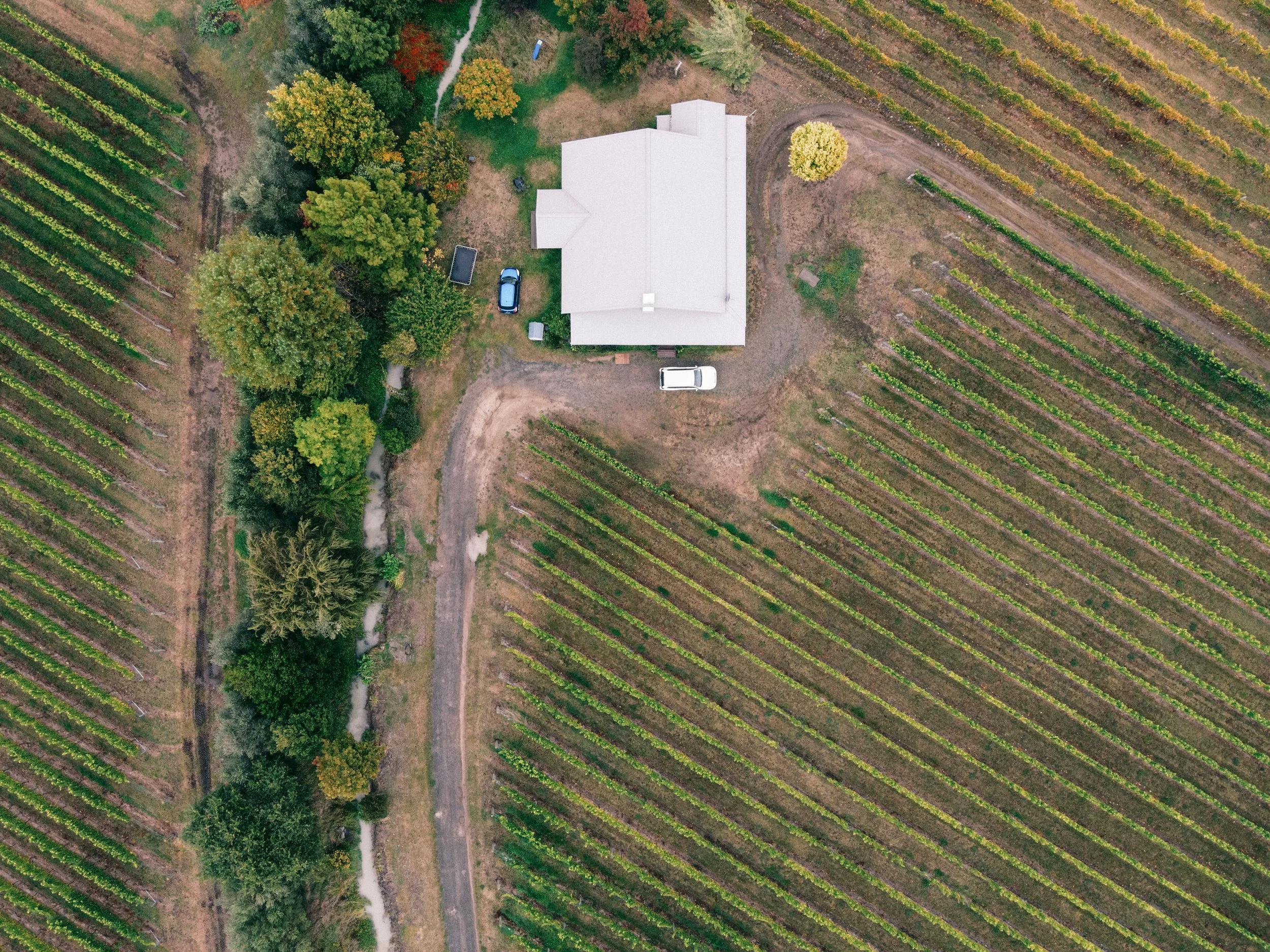
Aerial view of farm layout.
Professional Mapping & Spatial Design
We offer professional mapping and environmental modeling services to deliver high resolution planting designs tailored to your property for maximum performance.
In agricultural landscapes, spatial arrangement directly influences how effectively plant systems function. Where floral resources are located affects pollinator movement, presence and distribution of other beneficial insects, and overall - the continuity of insect regulated services across your site both spatially and temporally.
We carefully considering how field layout, terrain, and environmental conditions shape ecological function, including factors such as slope, aspect, wind exposure, sunlight, existing ground cover, and connectivity. We then use these variables combined with our knowledge of pollinator-plant relationships to model the optimal locations for various plant communities. The result is delivered as high-resolution planting maps with precise, site-specific instructions.
Implementation Plan
Design is only effective if it can be successfully implemented in the field.
We provide clear, practical implementation plans that translate ecological design into actionable steps. These plans are tailored to your operation—taking into account equipment, workflow, timing, and existing management practices to ensure that installation is both feasible and efficient. Implementation guidance includes site preparation, planting methods, and timing recommendations aligned with seasonal conditions.
This ensures that plant systems establish successfully and begin functioning as intended as quickly as possible. We also consider how installation fits into your broader operational calendar—identifying the most appropriate windows for seeding or planting and outlining how to integrate these steps without disrupting core production activities.
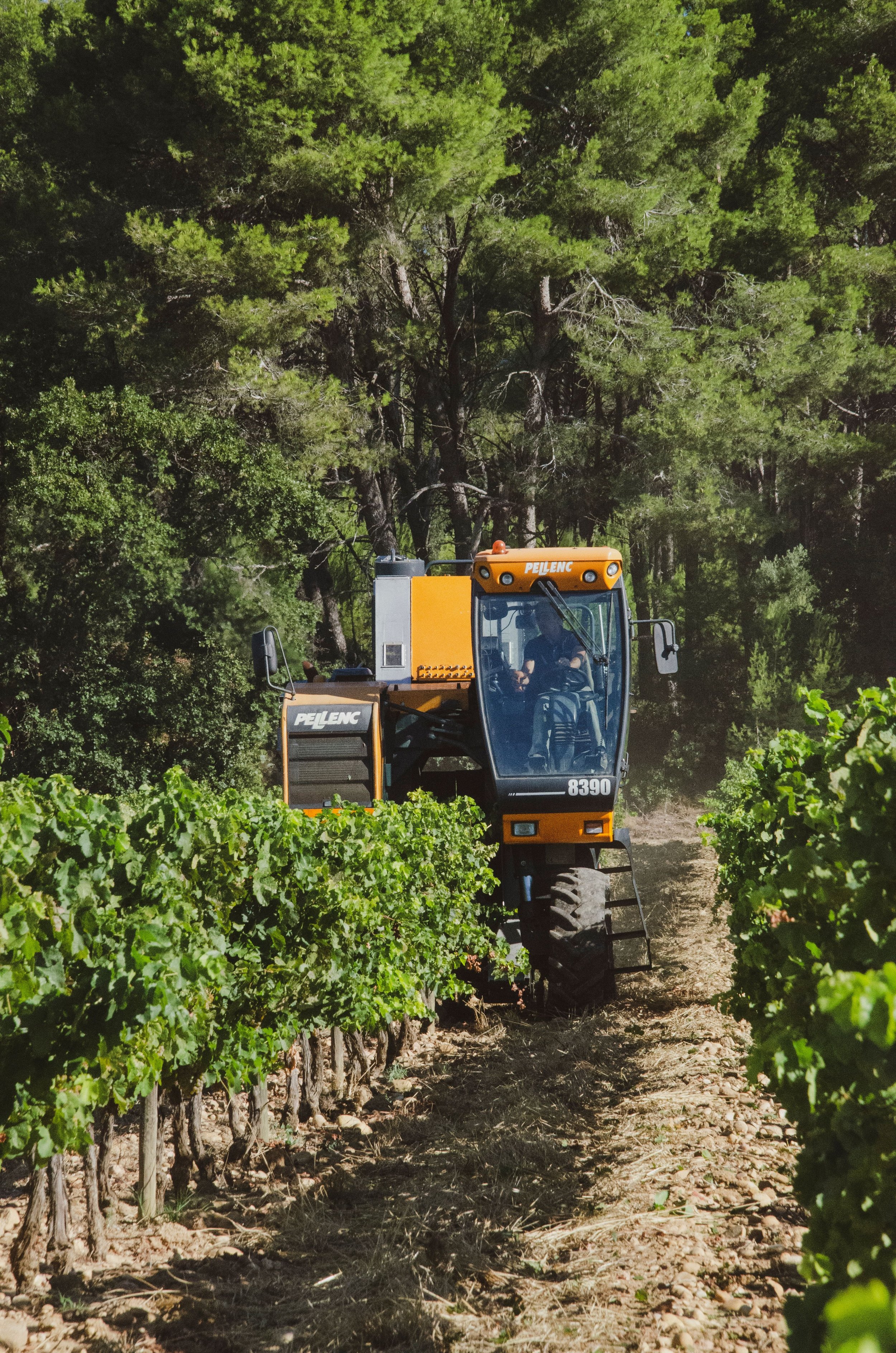
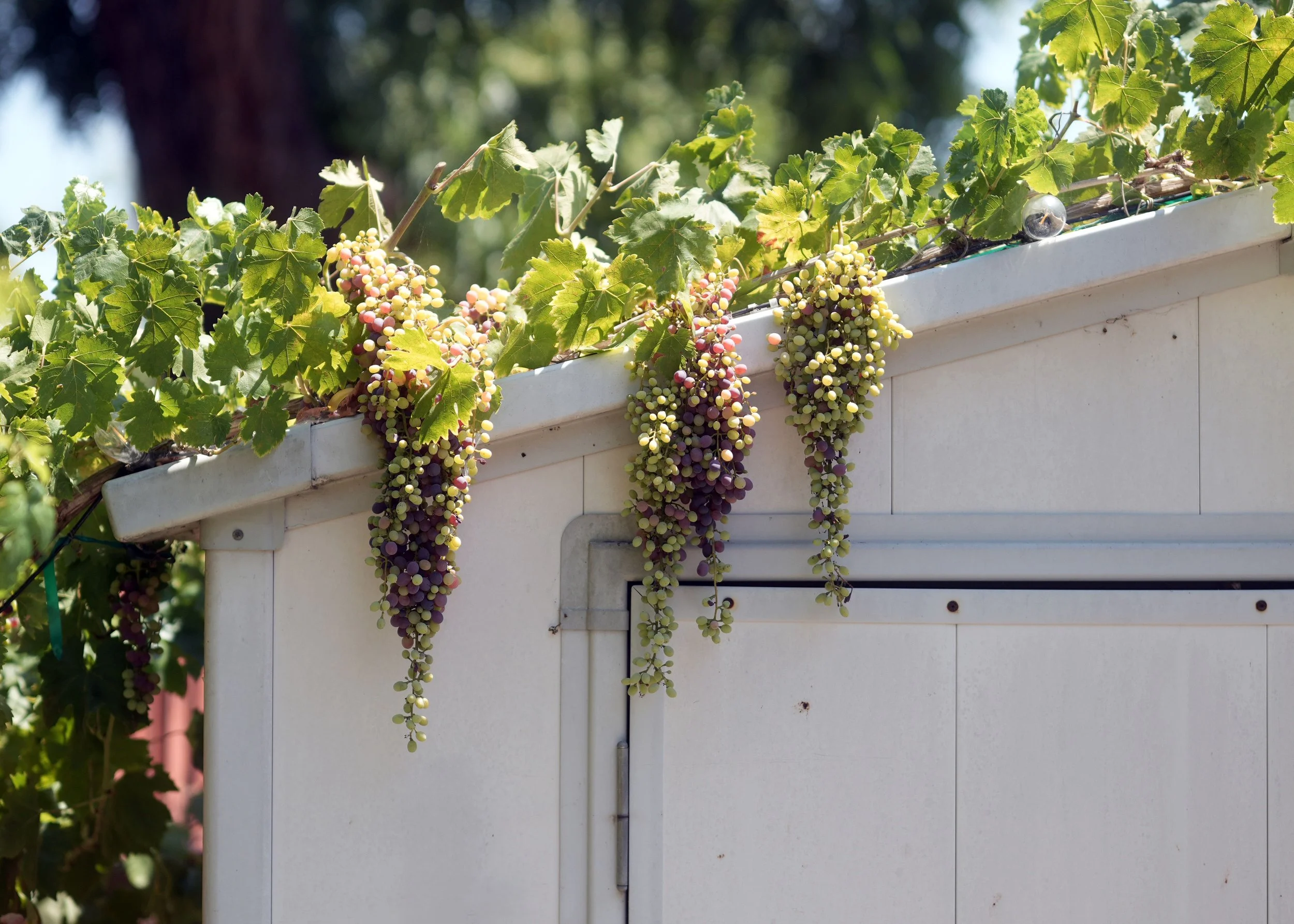
Grapevine harvesting
Marketing
As consumers and buyers place increasing value on transparency and become increasingly knowledgeable of sustainable and environmentally conscious farming methods - agricultural operations that can demonstrate these practices in a clean, clear, and credible way stand out.
Our work provides not only functional ecological benefits, but also a tangible story—one that connects your production practices to broader environmental outcomes such as pollinator support, biodiversity, and long-term land management. Because our systems are intentionally designed and structured, they translate naturally into clear and effective communication. Features such as flowering habitat, pollinator presence, and biodiversity improvements are visible, measurable, and easy to share with buyers, distributors, and customers.
Please see our two initiatives, Bee to Barrel and Bee to Basket.
We provide you with a clear ecological narrative alongside your system design, helping you understand and communicate what has been implemented, how it functions, and the benefits it provides over time - and material to illustrate this (site maps, phenology charts and link to more in-depth resources). This allows you to integrate ecological practices into your brand in a way that is grounded, credible, and directly tied to your production system—rather than relying on vague or generalized sustainability claims.
The result is a system that not only improves performance in the field but also strengthens your positioning in the market—adding value to your product through both function and story.
Service Packages
We offer three levels of system design (Basic, Standard and Premium) for Vineyards, Hopyards, Orchards and Other Pollinator-Dependent Crops. To learn what makes each system unique and what is included in each package, please select the page to learn more.
Final scope and pricing are tailored based on site size, crop type, and system complexity.