
Hopyard Systems
Supporting natural pest control and system stability in hop production through science-based native plant design.
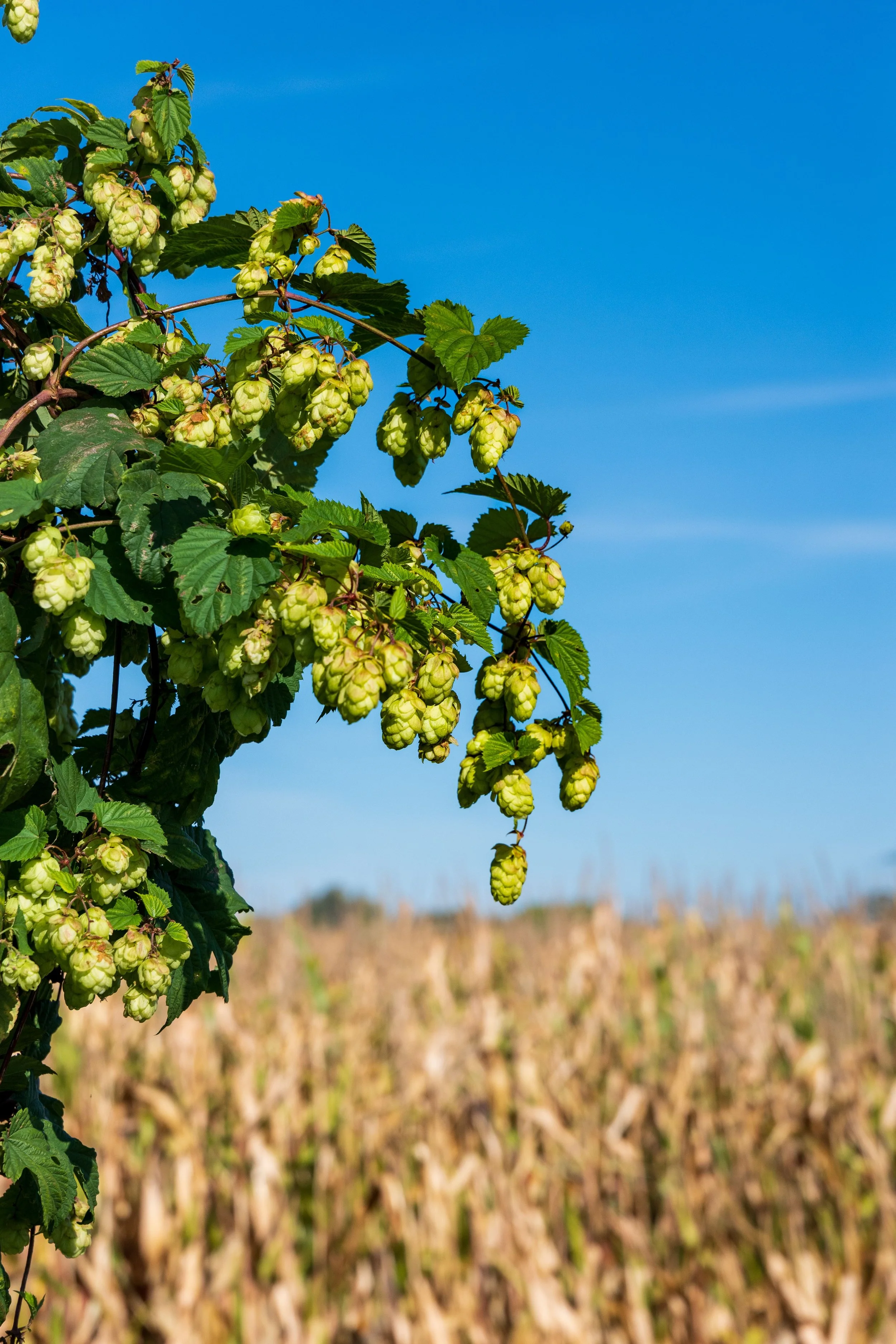
Hop production is closely tied to environmental conditions and seasonal timing. While hops are primarily wind-pollinated, the surrounding ecological system plays a critical role in crop health and stability.
Hop yards are particularly vulnerable to pest pressure—especially from aphids, spider mites, and other herbivorous insects that can impact both yield and cone quality. Managing these pressures effectively depends on consistent biological support throughout the growing season. We design plant communities that support beneficial insects— including predators and parasitoids such as lady beetles, lacewings, hoverflies, and parasitic wasps—that contribute to natural pest regulation.
These species rely on continuous access to nectar, pollen, and habitat to persist within the system. In many hop production landscapes, floral resources are limited or fragmented, reducing the presence and effectiveness of these beneficial insects. As a result, biological control can become inconsistent, often increasing reliance on external inputs.
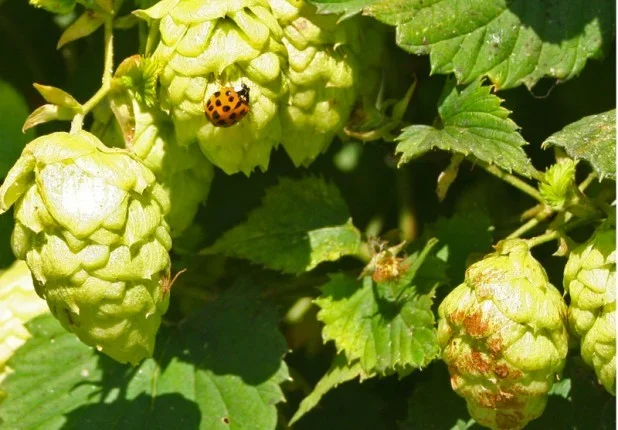
Lady beetle at Fort George, OR, hopyard.
Our approach integrates native flowering plants that provide continuous floral resources across the season. These systems are designed to support beneficial insects before pest populations can build, maintain their activity during peak pressure, and sustain them later into the season.
In addition to supporting insect communities, these plant systems contribute to soil health and function. Many native species develop deep or fibrous root systems that improve soil structure, increase water infiltration, and reduce erosion—particularly important in cultivated hop yard soils. Some early-season species can also enhance soil fertility by increasing biologically available nitrogen, while plant cover helps regulate soil temperature and moisture. Together, these processes support more resilient plant growth and improve overall system performance.
As with other cropping systems, timing is critical. Hop development follows a distinct seasonal pattern dependent on region and environmental conditions. By aligning the appropriate plant communities with region-specific cycles and site-specific needs, we improve the consistency and effectiveness of natural biological pest control while strengthening the overall stability of the system.
Service Packages
We offer three levels of system design.
-
A practical starting point for improving biological support.
Site assessment
Regional Seed Mix - focused on providing beneficial insect habitat
Basic Planting Plan - outlines key planting zones such as edges and margins
Implementation guide
Introduces beneficial insect habitat and begins supporting natural pest control within the hop yard.
$2,000 – $3,500
-
Targeted system for improving pest regulation and consistency.
Detailed Site Assessment
Custom Seed Mix + Phenology Alignment
Detailed Planting Plan - High resolution, informed by site conditions and insect movement
Ecological Strategy + Seasonal Calendar
Full Implementation Plan + Guide
Spring Review - Opportunity for system refinement
Improves biological pest control, supports consistent beneficial insect presence, and reduces pest pressure over time—creating a more stable and reliable production system. Also supports long-term sustainability and farm branding.
$4,000 – $6,500
-
Full ecological integration for long-term system performance.
Everything in Standard, plus:
On Site Visit - for advanced site assessment
Full Property Design, including corridors and integrated habitat zones and surrounding landscape features
Biodiversity Baseline + Monitoring, early and mid-season insect observations to inform enhanced performance
Annual Follow-up + Recommendations
Customized Implementation Guide
Enrollment in Bee to Barrel Initiative
Maximizes long-term biological pest control, reduces reliance on external inputs, and creates a highly stable, self-supporting system across the property.
$7,000 – $10,000+
*Pricing shown for mid-size hopyard (approx. 50 acres). Final scope is adjusted based on site size, system complexity, and level of design detail.
For more details on each package, please: